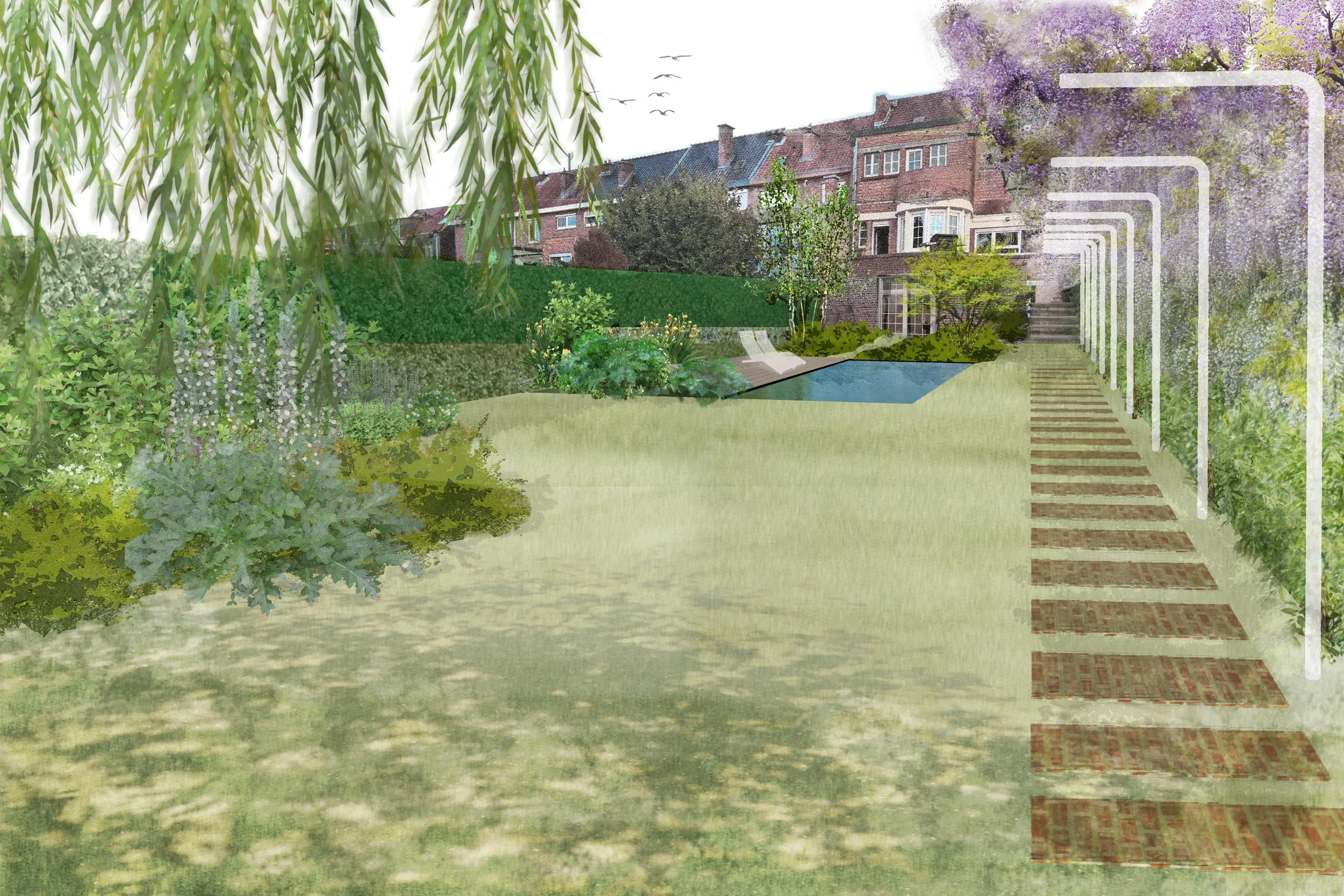
design of private garden projects
We help with planning, designing, and transforming gardens—whether it's your space, your family's, or the one owned by your group.
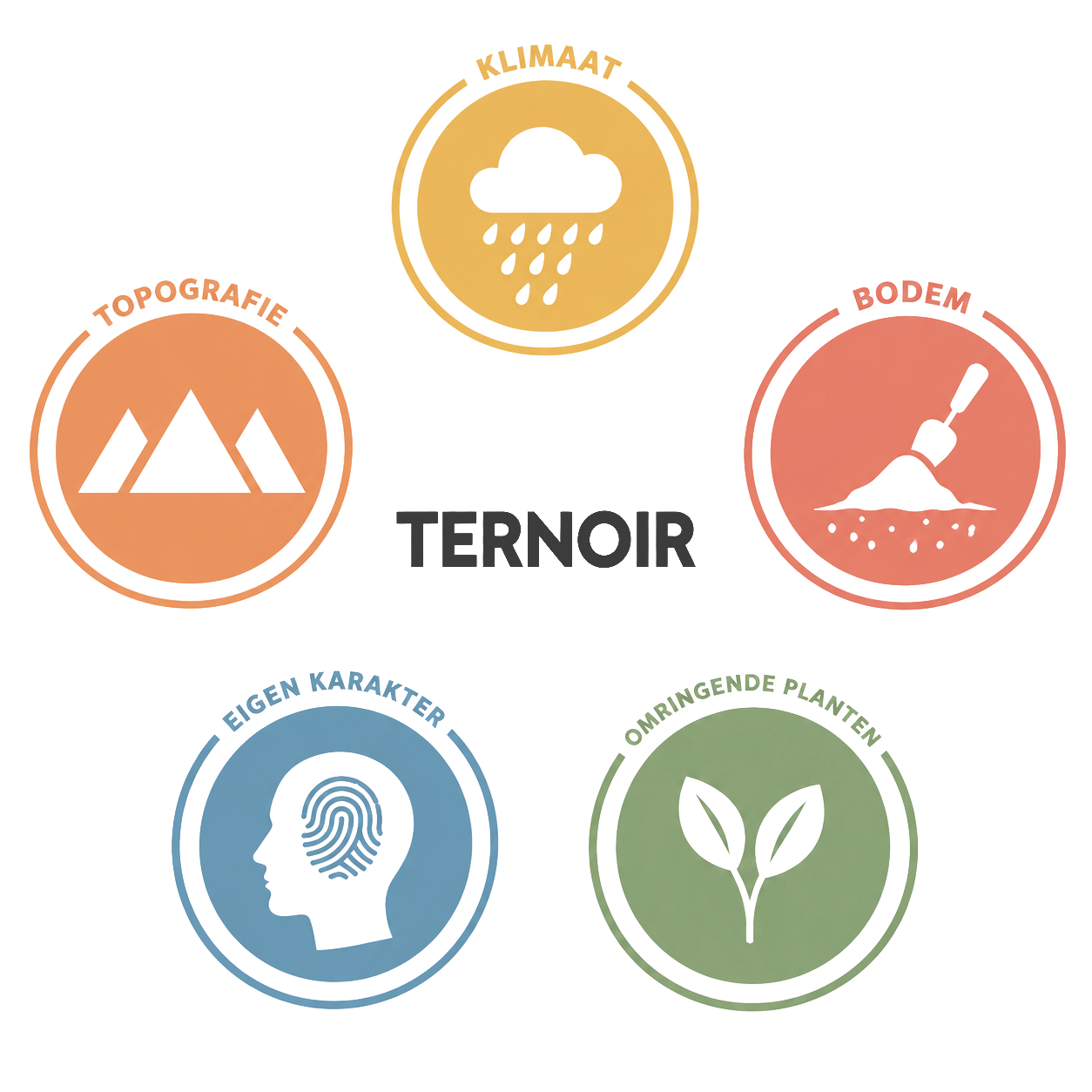
The name Ternoir is a combination of the terms “terroir” and “noir”
terroir:
how the soil, climate, and terrain give a food product its unique local flavor. In our gardens, we add one more ingredient: the owners’ identity! That’s how we consistently create a project that’s both fitting and unique.
noir:
This refers to the central role we assign to the soil; we hardly ever see it, but it is the foundation for everything that happens above it. Without living soil—commonly known as “black earth”—there can be no healthy plants, no flowers, no fruit, and no healthy garden.
ternoir

design team
We are the landscape architects at Overlant. We extend our “sustainable beauty” approach—which we apply to our public projects by blending ecological principles with artistic imagination to create environments that are both high-performing and exceptionally attractive—to our private projects as well. Because a garden or private estate is much more personal and requires a different design process, we carry out these projects under the “Ternoir” label.
1. Customized Packages
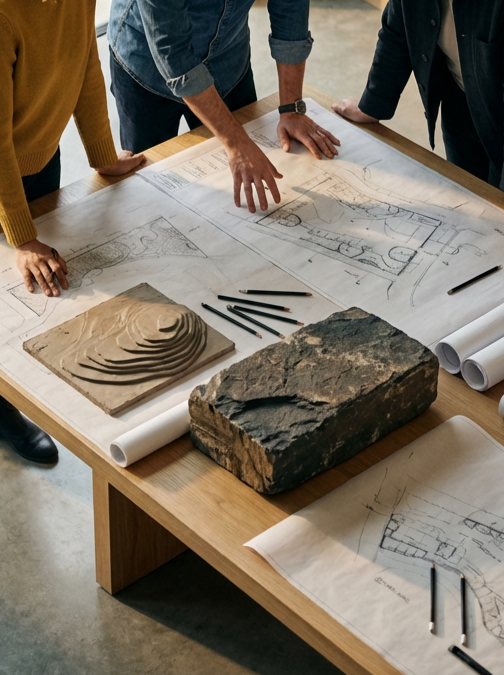
We’ve noticed that people want to do something with their gardens but aren’t quite sure what exactly—or how to get started. The traditional approaches of landscape architects and/or landscaping contractors often aren’t sufficient—or don’t appeal—anymore.
That’s why we offer alternative solutions that allow garden owners to actively participate in the design process, shape the garden themselves, or even build it themselves. We also see that people want to spread their plans out over a longer period of time, but still need an overarching vision and always want a garden that looks its best.
2. A Healthier Living Environment
John Muir, the father of the “National Parks” concept, wrote as early as the 19th century about the importance of a natural environment—places we need to play, relax, and reflect. But he also wrote about our human need to experience beauty. Beautiful things make us happy; we come to love them, and we want to preserve them. So, having a beautiful piece of nature of our own can actually make us a bit healthier.
3. Adapting to the New Normal
Our environment and climate are changing rapidly. A different approach and new techniques are needed: gardens that survive droughts, that can withstand extreme winds or rainfall, that provide us with coolness, that do not deplete the soil, and that do not require artificial additives or pesticides.
4. Many small ones make one big one
There are more than 2 million gardens in Flanders, and together they cover 12% of Belgium. It’s truly a land of gardens, and as such, they have enormous potential to collectively tackle major challenges. They help cool our living environments, provide people with views of trees, boost biodiversity, create safe havens for certain animal species, and mitigate drought and flooding by absorbing water and replenishing groundwater…
5. To inspire people
to participate, create, and enjoy.